


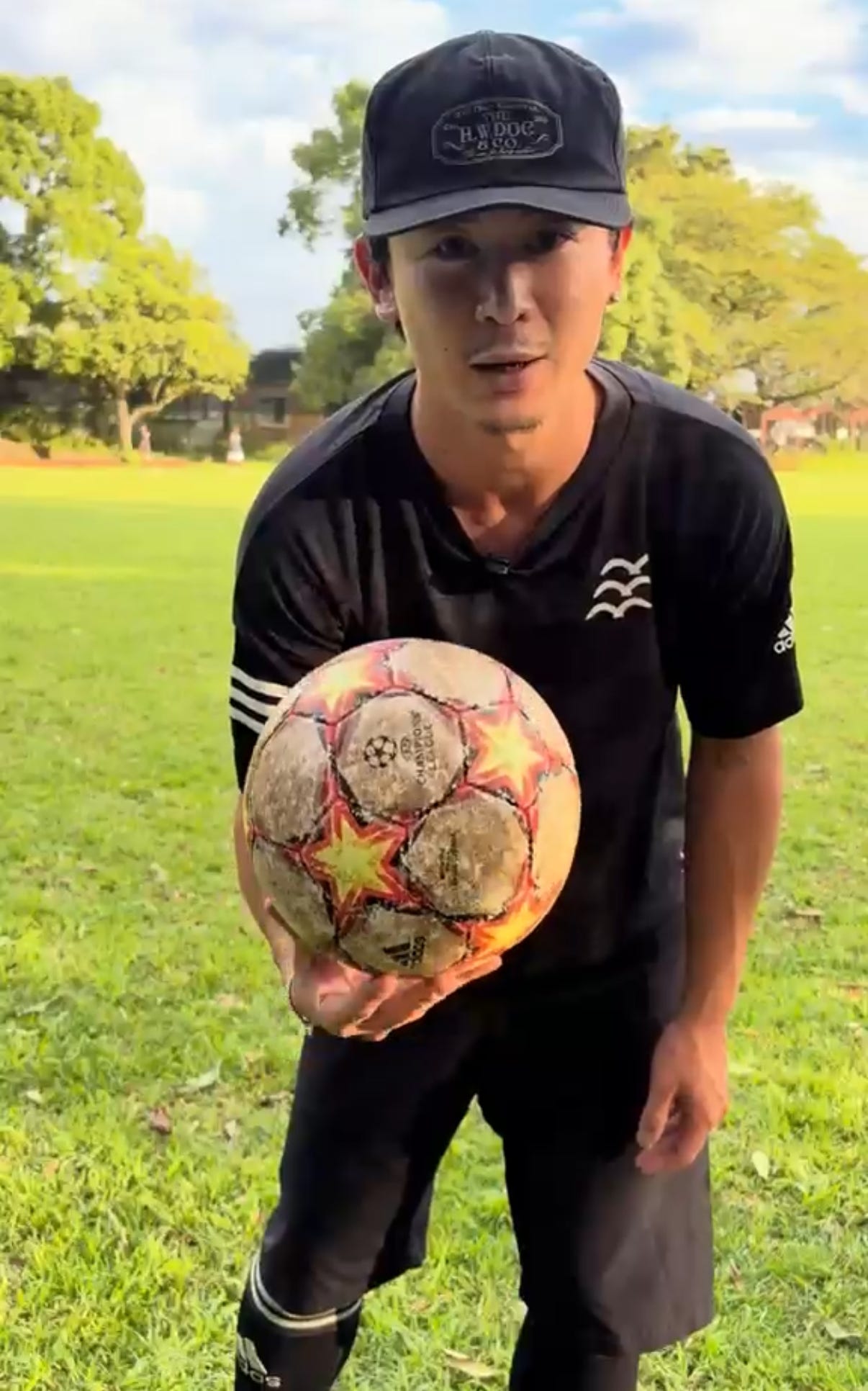
Masashi Wada wants to come home.
Not to the place he was born. He’s actually there now, recovering at his parents’ place in Yokohama, Japan, after a gruesome injury sustained in April. No, Wada wants to return to his new home in Maine — the place where he evolved as a star player for the Portland Hearts of Pine.
“I cannot say I’d be 100% back because I don’t have a contract right now, but we have to figure it out with the team,” Wada said during a Zoom call last week. “Hopefully, I’ll be able to come back to the pitch at Fitzpatrick Stadium. I want to show my ability, what I’ve done last year, even more. I just want the supporters to say, ‘Oh, Masa’s back, and he’s better than before.’ That’s what I want them to think. That’s my message for them.
“And I just want to say thank you.”
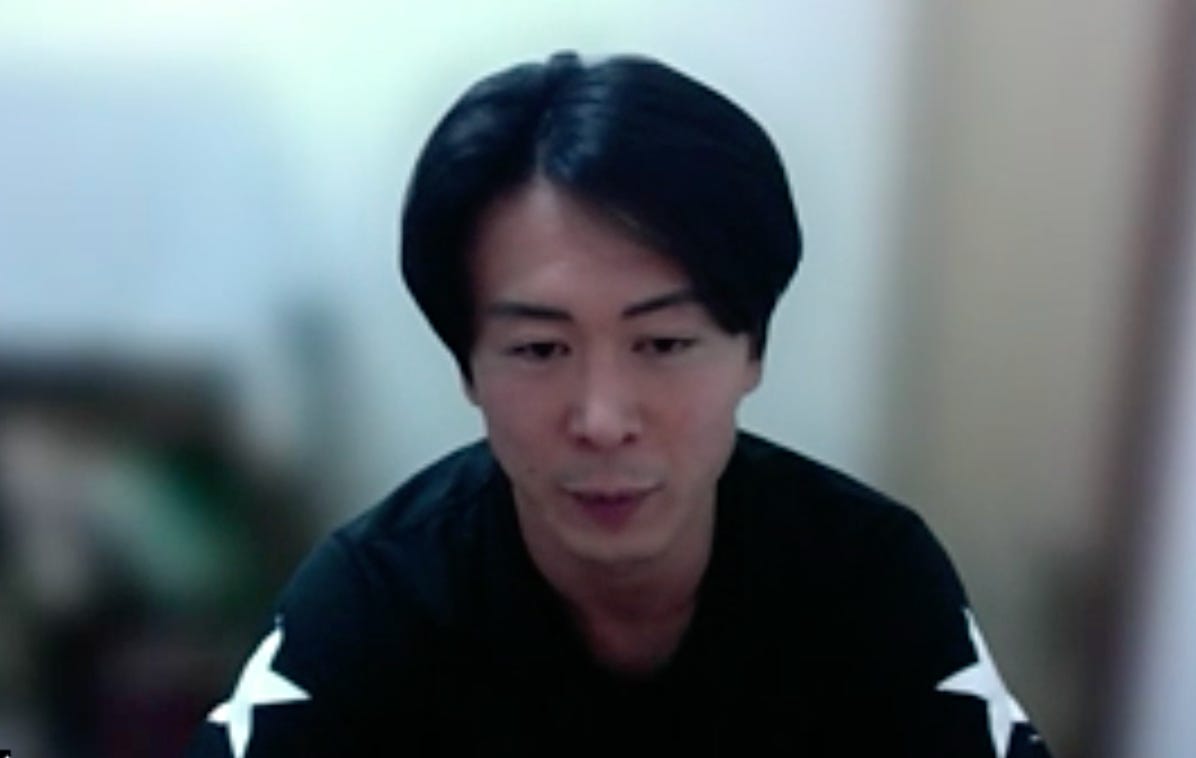
Wada’s gratitude comes from the acceptance he felt while living outside of Japan for the first time last year. He felt supported by his teammates, by his coaches and the front office, but perhaps even more importantly, he felt accepted by the community. His first year in Portland was a remarkable experience for him because it helped him grow as a person.
Asked what he missed most about Portland, Wada, who calls himself Masa but goes by Sashi around the club, responded quickly.
“Nature, and the people,” he said. “Of course, I like Japanese people, Japan. The food is amazing. Everything is cheaper than the U.S. But relationship-wise, American people, especially supporters, especially Mainers, have been really nice to me. Every time I went outside, they said, ‘Hi, Masa.’ They are so sweet. And especially after I got injured, every time I see the supporters, they said, ‘I hope you’ll get better.’”
The fans aren’t the only ones who want Wada to get better soon. Hearts Sporting Director Ray Saari has been monitoring his rehabilitation from afar since taking his job in late August.
“We’re getting very consistent updates on how he’s doing, how he’s progressing,” Saari said. “We’re happy to say he’s progressing very well, and, as you would expect from Sashi, he’s ahead of schedule. That, in a nutshell, explains his professionalism and his dedication to his craft. He’s a consummate professional. It’s a devastating thing that happened to him, but we’re very hopeful he’s able to make a full recovery, and I feel good that that’s going to happen.”
Wada’s contractual situation may be up in the air, but it’s clear both he and the team would like to see him return. Wada plans to speak with his agent and then team management soon. He is hoping to head back to Maine next month, where his wife has remained.
Recently, Saari was asked about what he looks for in players and he made it clear one of the most important factors is finding winners who have not only succeeded but shown they will lead the way. Character matters when it comes to the club’s plan to build future teams, and from Saari’s perspective, Wada has more than enough of it.
“Sashi epitomizes the values we want in players in so many different ways,” Saari said. “He’s an amazing professional. He’s a competitor. In his first year he was very successful in the league and a very important player for our team. If we had a starting 11 full of Sashis, we’d win a lot of games. Just a very good player, an amazing person, a true competitor and a great teammate.”
Wada has been a fan favorite since the beginning of the Hearts’ first season last year, when he scored 9 goals and earned USL League One all-league first team honors. He is an attacking midfielder, known as the No. 10 in the soccer world, the engine that gets a team’s attack in full gear.
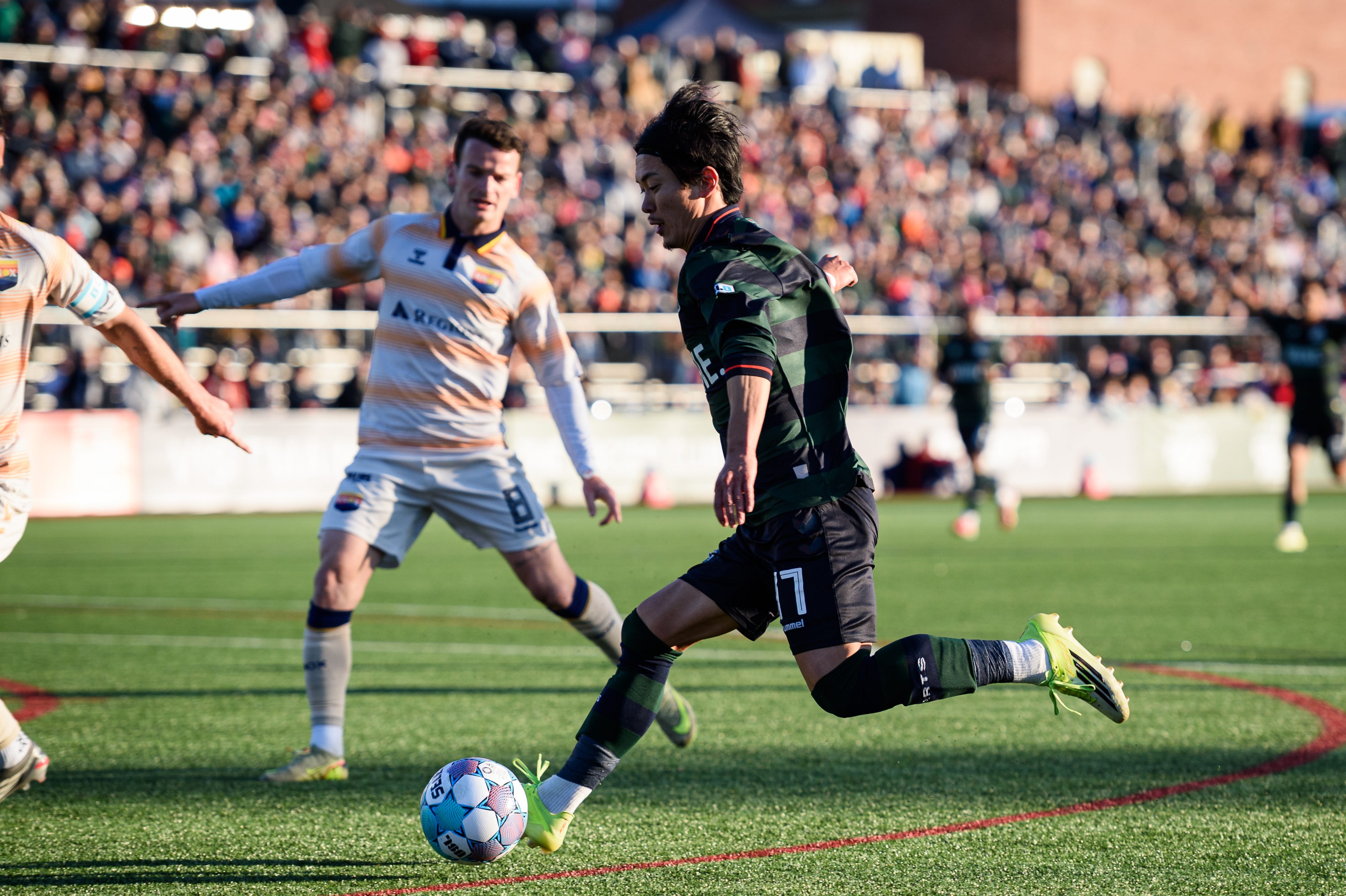
Wada has as much of a symbiotic relationship as a player can have with fans. The player gives as much as is possible on the pitch and the fans reciprocate with support and adoration.
Sometimes, as in Wada’s case, players give so much more.
On April 11, Portland played its first home game of the year against One Knoxville, the defending USL1 champions. Wada remembers the date well because it was his 29th birthday. He was already off to a promising start, having notched a goal and an assist in the season opener a few weeks earlier.
Wada described what happened next in a post he wrote 12 days later and published on Substack (more on his writing a bit later in the story).
“About ten minutes in we had a corner. My role was to attack the second ball if there was one. The cross went to the far post and a teammate headed it back toward goal. It came toward me, but instinctively I sensed it was slightly closer to the keeper. I saw out of the corner of my eye that the keeper was coming, so instead of going for the ball I shifted to get ready to pounce on a spill.
I saw him fumble it and thought I might get there, so I moved in. In that moment the keeper came at a speed and with a power I’d never experienced—full extension dive with all his weight—and landed on my left leg.
‘Are you kidding?’ I thought, and tried to pull my foot away, but my leg was already trapped. Even now as I write this I can feel the pain of that moment and my face involuntarily contorts.
And then in the next moment —
Crunch.”
Wada said he suffered a dislocated ankle and a broken tibia. The bone tore through the skin. Wada remembers sitting on the grass just outside of the goal, trying to push the bone back under. An ambulance came onto the field, there were many tears and even more pain, and he was whisked away to the hospital, where he would undergo the first major surgery of his life.
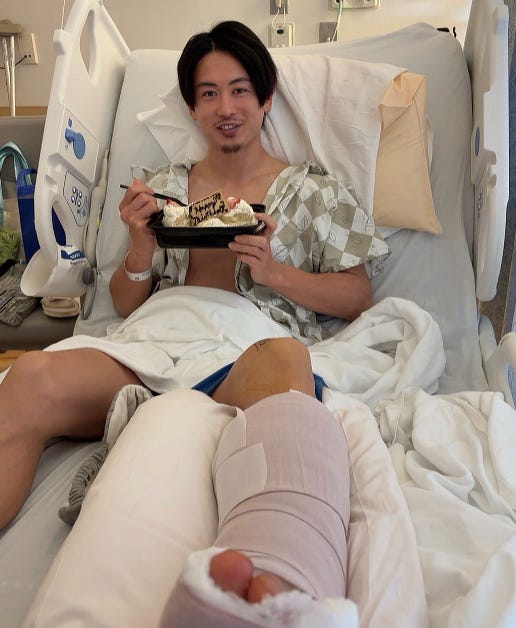
The aftermath was a whirlwind; he had to take strong pain medications because the pain was even worse than in the moments after the collision. In some ways, what proved worse than the pain was his active mind, as he wrote in another Substack post:
“That’s when reality started sinking in.
This really is a major injury.
And then a more practical kind of fear suddenly hit me.
‘What if the team decides they don’t need me anymore because of this?’
As the panic started to calm down, a heavier, more realistic fear came rushing in all at once:
‘What’s going to happen to me now?’
That thought hit hard. My mood dropped instantly.”
Within a few days, he was walking outside with help from crutches. Right away, he encountered fans who wished him well. A restaurant owner whom he had become friends with asked him if he would dog sit for the man’s pet, which Wada was happy to do. He found solace in kindness, something that clearly kept him grounded and focused on the task at hand.
Those feelings of community can be especially healing. So too can family. In August and at the urging of Hearts coach Bobby Murphy, Wada traveled home to Japan for continued rehabilitation, along with something Wada relishes: his mother’s home-cooked meals. He has stayed with his parents in Yokohama since, building strength and healing mentally from the injury.
Before long, he found himself missing Portland. In some ways, it’s not surprising that Wada has found such an affinity for his new home away from home. Portland shares some similarities with Yokohama, which, despite a population of almost 3.8 million, is loved for its laid-back, romantic seaside vibe and diverse culinary scene. Yokohama sits close to Tokyo but feels removed from the thick of its sprawl, and the energy there is different, fresher. Like Portland, it’s a historic, seafaring alter ego to a bigger city nearby. (Wada cited Boston.)
It’s Hearts fans who have pushed him forward.
“What surprised me most was how many messages I got from Hearts supporters.
The club’s official account had posted an update explaining my situation, and seeing all those messages come in honestly moved me.
So I started reading through them one by one.
They were full of kindness. And what made me happy too was that I had gotten to the point where I could understand most of them without translating them into Japanese. Being able to understand the English directly made me both happy and emotional.”
Wada’s Substack is a portal into the psyche of an injured athlete, an empathic journey that feels more like a poem. With its staccato cadence, his writing offers insight into a man who is both thoughtful about the world around him and struggling with what could be the first true trauma of his life.
These days, Wada gets to train with a ball on his feet. He pushes himself daily with his rehabilitation. He finds joy in the aches that come post-training because they mean his body is healing.
“I need to be careful not to hit my ankle again, of course,” Wada said. “But that being said, if I keep being worried about my ankle, my condition wouldn’t come back, and then I couldn’t play a hundred percent. So personally, I think I shouldn’t care too much about my ankle once it gets better.”
Saari has heard from the doctors in Japan. He’s seen videos of Wada’s rehab and training. None of it surprises him because Saari knows that Wada is a technical and energetic player with a high level of professionalism and a powerful engine that drives him. The expectation is that Wada will be ready to play sometime during preseason, which opens in February.
The Hearts sporting director is excited at the prospect of bringing back the team’s No. 10.
“We talk about it as a group quite a bit: he raises the level of the people around him,” Saari said. “When one of the best players on your team is also the hardest-working player on your team, younger players and guys who maybe haven’t been in the league look at that and think, man, our top guy is also running the most. If he’s doing it, I have no excuse. I have to do it.”
Saari added, “He’s going to leave everything on the field. And I’m sure everybody who has been around the team has seen that’s what this fan base demands. When you go out on the field, you have to empty the tank.”
Wada feels like Hearts supporters emptied their tanks for him by showing him so much love. Now, he is ready to give it back, a man driven by all of those messages he received.
“That made me think I need to work hard to get back to the pitch, even when I got back to Japan,” Wada said. “That made me work hard even when nobody was watching me. Because nobody was watching me, I could have done nothing. But I do it every day, because a lot of supporters, a lot of people, are waiting for me.
“So that’s my responsibility.”
Editor’s Note: Both videos are courtesy of Masashi Wada, who kindly shared them with The Hearts’ Beat.